
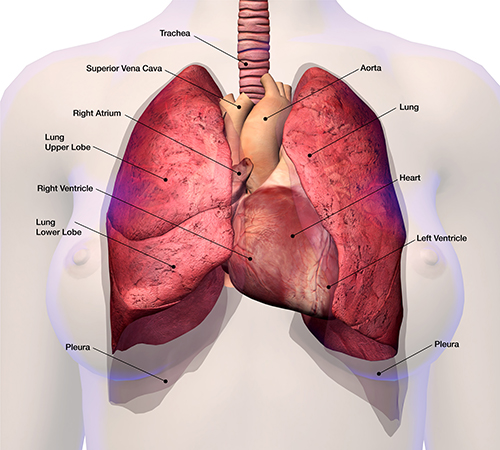
The superior vena cava is a major vein in your upper body. It carries blood from your head, neck, upper chest, and arms to the heart. Superior vena cava syndrome (SVCS) happens when the superior vena cava is partially blocked or compressed. Cancer is usually the main cause of SVCS.
The drawing below shows where the superior vena cava is in your body.
What causes SVCS?
SVCS is more common if you have lung cancer, non-Hodgkin lymphoma, or cancer that spreads to the chest. Cancer can cause SVCS in several ways:
-
A tumor in the chest can press on the superior vena cava.
-
A tumor can grow into the superior vena cava and block it.
-
Cancer can spread to the lymph nodes around the superior vena cava. The lymph nodes can get larger and press on or block the vein.
-
Cancer can cause a blood clot in the vein. A pacemaker wire or a catheter in the vein could also cause a clot. A catheter is a flexible tube that lets your health care team give you fluids or take them out.
What are the symptoms of SVCS?
The symptoms of SVCS usually develop slowly. SVCS can cause serious breathing problems and is an emergency, but most people do well with treatment.
The most common symptoms of SVCS include:
-
Swelling of your face, neck, upper body, and arms
-
Trouble breathing or shortness of breath
-
Coughing
Call your health care team immediately if you have any of these symptoms.
Less common symptoms include:
-
A hoarse voice, difficulty speaking, or trouble swallowing
-
Chest pain
-
Swollen veins in your chest and neck, or swollen arms
-
Coughing up blood
-
Faster breathing
-
Skin that looks blue
-
Problems with one side of your face. These include a sagging eyelid, no sweat, and a small pupil of the eye on that side. These symptoms together are called Horner's syndrome.
These symptoms are rare. Call your health care team right away if you notice any of them.
SVCS may develop quickly and block your breathing completely. If so, you might need a machine to help you breathe until doctors treat the blockage. It is more common for SVCS to develop slowly. If this happens, your other veins may get larger to carry extra blood and you may experience milder symptoms.
How is SVCS diagnosed?
The following tests will help your doctor diagnose SVCS.
-
X-rays of your chest or the vein. X-rays of a vein use dye to help the vein show up clearly.
-
CT scan, also called computed tomography
-
MRI, also called magnetic resonance imaging
How is SVCS treated?
You might not need treatment right away if:
-
Your symptoms are not causing any problems
-
Your windpipe is not blocked
-
Blood is flowing well through other veins in the chest
Your chemotherapy or radiation therapy for cancer can also help treat SVCS.
Other treatments that can help include:
-
Raising your head when you lie down
-
Medications called corticosteroids, which can lower swelling and inflammation.
-
Medications called diuretics, which help you urinate more to get rid of extra body fluid
-
Treatment to break up a blood clot if there is one
-
Getting a small tube put in the blocked vein to let blood through. The tube is called a stent.
-
Surgery
SVCS in children
SVCS is rare in children, but it can be life threatening. If your child has signs of SVCS, it is important to call the doctor right away. A child's windpipe is smaller and softer than an adult's windpipe. It can swell or get blocked faster and cause breathing problems sooner.
Common symptoms of SVCS in children are similar to adult symptoms. They may include:
-
Coughing
-
A hoarse voice
-
Trouble breathing
-
Chest pain
Talk with your health care team or your child's team about any symptoms you notice. This includes any new or different symptoms.
Questions to ask the health care team
You may want to ask your cancer care team the following questions.
-
What is my or my child's risk of experiencing superior vena cava syndrome?
-
What symptoms or side effects should I tell you about right away?
-
What is the best way to reach you during the day? What about after hours?